
Why LinkedIn posting frequency matters less than you think

The LinkedIn advice industrial complex tells you to post daily. Here’s why that advice is destroying your engagement.
Every LinkedIn guru has the same advice: post every day or the algorithm will forget you exist. Daily publishing builds momentum. Daily posting keeps you top of mind. Daily content trains the algorithm to favor your profile.
Except the data tells a completely different story.
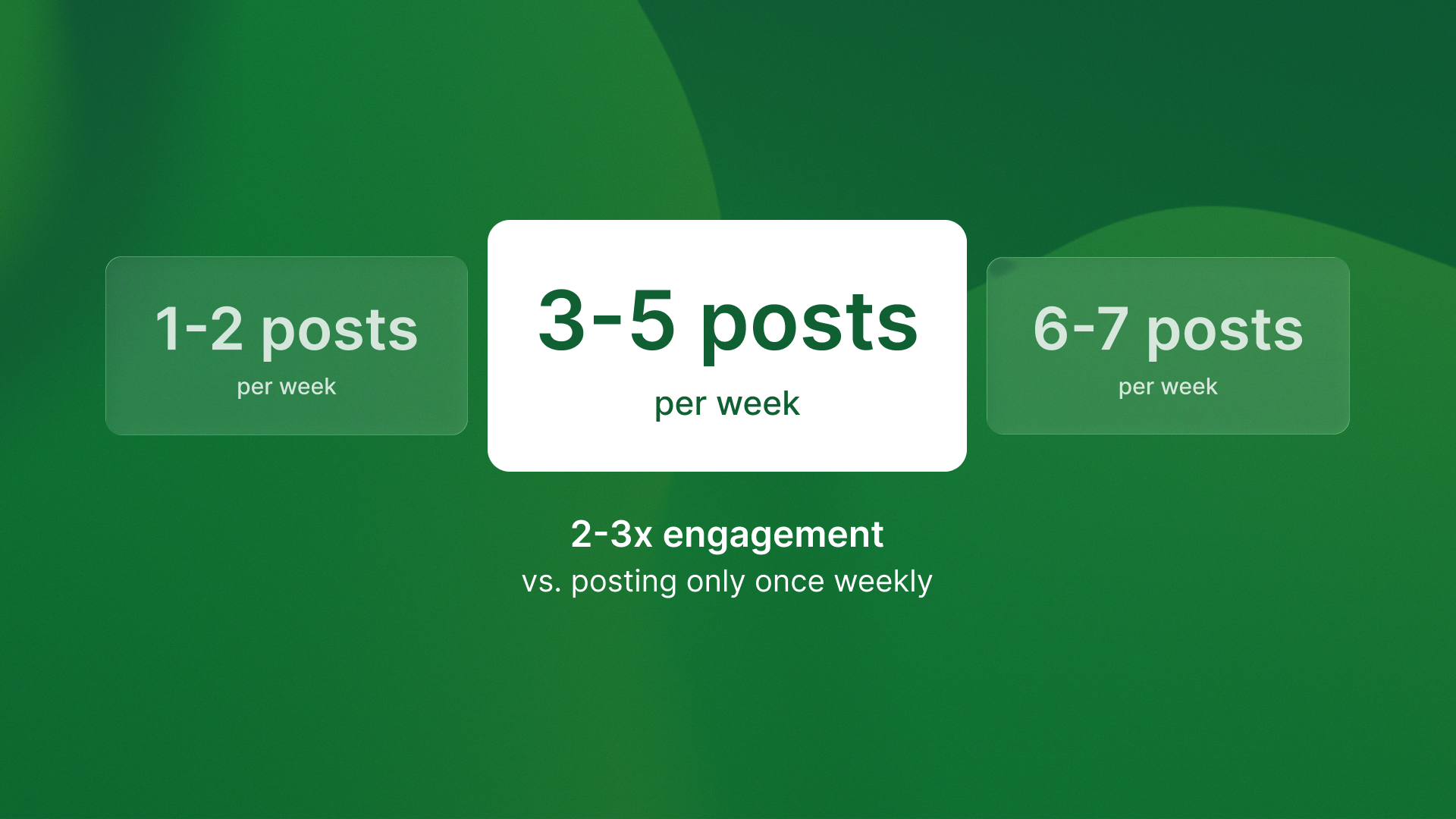
Voketa’s 2026 LinkedIn Engagement Study analyzed thousands of accounts and found a surprise. Accounts posting 3-5 times per week get 2-3x more total engagement. Accounts posting once per week get less engagement. But here’s what the daily posting advocates won’t tell you. That same data shows diminishing returns beyond five posts per week. The sweet spot for LinkedIn posting frequency isn’t daily publishing. It’s strategic frequency.
Understanding the right LinkedIn posting frequency isn’t about laziness or lack of discipline. It’s about how workflow friction degrades content quality at scale.
The daily posting trap creates unsustainable friction
Daily posting sounds simple until you try to sustain it for three months. The operational overhead compounds fast.
You’re context switching between ideation, drafting, editing, and scheduling every single day. You’re rushing to hit arbitrary quotas instead of developing substantive insights. You skip research because you need to publish in two hours. You copy-paste frameworks because you ran out of original angles last week.
Workflow fragmentation is why most daily posters burn out within 90 days. The system creates friction at every stage:
You’re constantly switching between creative work (developing ideas) and operational work (formatting, scheduling, posting)
That cognitive overhead drains the energy you need for the strategic work that actually drives engagement
You hit your posting target while your engagement rate drops month over month
The result: declining content quality disguised as consistency.
Strategic frequency enables the work that compounds visibility
Reducing posting frequency from daily to 3-5x weekly isn’t about doing less work. It’s about redirecting effort from operational overhead to strategic activities that compound over time.
When you’re not scrambling to publish something every 24 hours, you have bandwidth for:
Quality research and unique angles
Time to find data points like Social Insider’s 2026 LinkedIn Benchmarks. It shows the 2026 average LinkedIn engagement rate is 5.20%. It also reports 8% year-over-year growth
Space to develop thoughtful positioning instead of recycling conventional wisdom
Capacity for genuine engagement with responses
The LinkedIn algorithm 2026 actually rewards this engagement work. A post with 40 thoughtful comments outperforms a post with 200 drive-by likes. But if you’re publishing daily, you don’t have time to nurture those conversations. You’re already writing tomorrow’s post.
Strategic frequency creates breathing room for the activities that drive engagement velocity. Developing unique angles, citing research, responding to comments thoughtfully. These behaviors compound visibility over weeks and months.
If you’re building a LinkedIn content strategy, the quality-over-quantity approach requires structural support. GrowTal’s content strategy consultants help companies develop sustainable thought leadership systems that prioritize engagement over arbitrary posting quotas.
The workflow system problem nobody talks about
Here’s what I’ve noticed working with teams who struggled with daily posting. The problem isn’t motivation. It’s workflow fragmentation.
Most content systems treat LinkedIn publishing as a series of discrete tasks:
You write in a Google Doc
You edit in Grammarly
You format in a text editor
You copy into LinkedIn
You schedule for 9am
You hope it performs
Every post requires touching four different tools. That friction makes daily posting feel impossible.
The same teams who burned out on daily posting often find 3-5x weekly sustainable once they fix the workflow. Not because the frequency is easier, but because eliminating operational friction creates capacity for strategic work.
The workflow challenges extend beyond content creation. Companies that rethink go-to-market systems often find that GTM strategy experts can help. They align content operations with business goals. This makes LinkedIn content strategy a revenue driver, not a checkbox task.
ReachSocial fits into the broader conversation about sustainable thought leadership systems. When your entire workflow lives in one place, posting frequency becomes a strategic choice instead of an operational constraint. You’re not copy-pasting between tools. You’re focusing on developing ideas worth engaging with.
Teams that prioritize workflow efficiency over arbitrary posting quotas tend to see better long-term results. The system enables consistency without sacrificing quality.
What strategic LinkedIn posting frequency looks like in practice
Let’s get concrete about how often to post on LinkedIn when using strategic frequency.
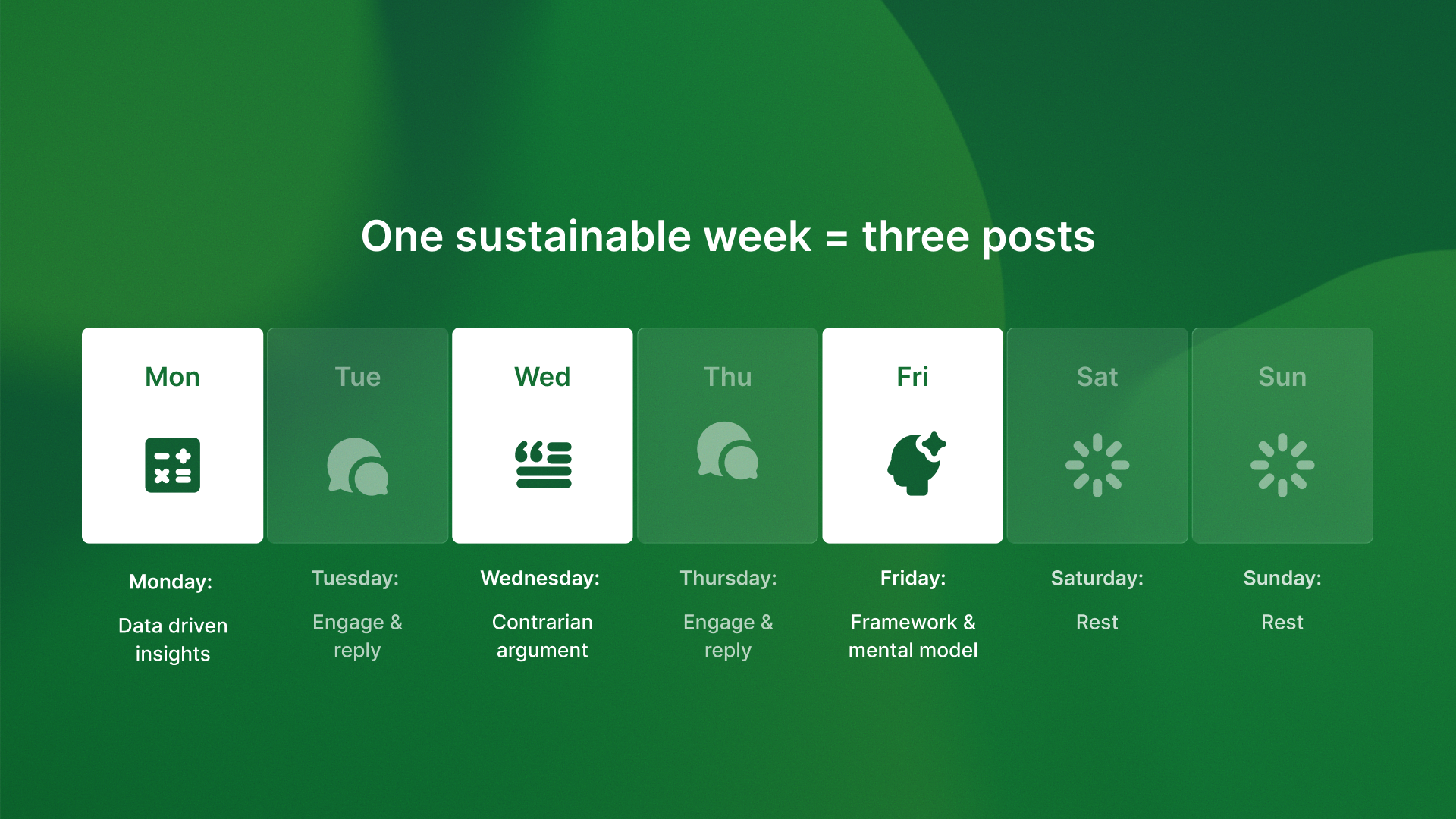
Monday: Publish a data-driven insight post
Research takes 90 minutes, drafting takes 45 minutes. You’re finding specific statistics, attributing sources, developing a unique angle that challenges conventional wisdom.
Wednesday: Share a contrarian argument with supporting evidence
Research takes 60 minutes, drafting takes 30 minutes. You’re building a logical case backed by data, not recycling hot takes from your feed.
Friday: Post a framework or mental model with practical application
Drafting takes 45 minutes. You’re synthesizing insights from the week into something your audience can immediately apply.
Total time investment: approximately 4.5 hours per week. Because you are not switching contexts each day, those hours create better content. That content gets more engagement per post.
Compare that to daily posting. Seven posts per week at 45 minutes each (if you skip research) equals 5.25 hours. Higher time investment, lower quality output, more burnout risk.
The math only works if you believe volume matters more than engagement rate. The data suggests otherwise.
Just as marketing design workflows improve with smart planning, LinkedIn content does better with more time. Focus on strong insights instead of meeting daily quotas.
For teams exploring content resources and strategy frameworks, the GrowTal blog offers more insights. It shares ways to build scalable marketing systems without burning out your team.
If you’ve been struggling with consistency on LinkedIn, the answer isn’t more discipline. It’s a better system. Strategic frequency combined with workflow optimization creates sustainable thought leadership that compounds over time.
Ready to build a LinkedIn content system that actually works? Start by testing 3-5 posts per week for the next 30 days and track your engagement rate compared to your current frequency.